May 282017
 
I'll push you

“I came across the story recounted in I’ll Push You in October 2015, a little over a year after these two men accomplished what many had said would be impossible. While their five-hundred-mile wheelchair journey through Spain is truly incredible, the most powerful part of their adventure is the undying and relentless nature of the love they possess for each other.

“All too often, men shy away from intimacy, or run from being vulnerable. However, these two have redefined what friendship means. They have challenged conventional views of what a relationship can be, and in doing so, challenge many traditional concepts. Their deep friendship has kept them from being victims, has given them the opportunity to redeem any suffering they have experienced, and has allowed a beautiful adventure of life to unfold.

“The story behind these pages reminds us that God didn’t create us to live alone. He never meant us to be solitary creatures. I’ll Push You demonstrates what it means to live in community with one another and reveals what can happen when we shoulder each other’s burdens. Justin and Patrick demonstrate the beauty that exists when we choose to be the hands and feet we are called to be. They show us the redeeming power that exists in giving others the opportunity to love all of who awe are, in spite or our flaws and imperfections.” [From the Foreword, by Donald Miller].

I’ll push you : A journey of 500 miles, two best friends, and one wheelchair. Patrick Gray and Justin Skeesuck. Carol Stream, Illinois, USA: Tyndale Momentum, 2016.

May 242017
 
Thrive

If you make one too many withdrawals from your health bank account and only a few or no deposits then you will collapse on top of your money and your power, hopeless. This unfortunate situation may happen to you, among other miseries, if you balance your life on a two-legged stool holding onto your money and your power, as your only trophies for "success." Arianna Huffington, a very rich journalist, the president and editor in chief of The Huffington Post Media Group, wants with this book to define and review a third measure of success, the “third leg”, that in turn, consists of four pillars: well-being, wisdom, wonder, and giving, which are “common themes embraced by people who are genuinely thriving in their lives”. What I like of this book, besides its clear message, it’s the fact that it was written by someone who draws from her own experience and who, in spite of all her riches, wants to share her own enlightenment.

Thrive : the third metric to redefining success and creating a life of well-being, wisdom, and wonder. Arianna Huffington. New York: Harmony Books, an imprint of the Crown Publishing Group, a division of Random House LLC, a Penguin Random House Company, 2014.

Related Website: “Draw My Life” with Arianna Huffington.

Jan 042017
 
The Element

Why would I recommend a book written back in 2009 for the new year 2015? Needless to say, a good advice is always timeless. What do Matt Groening, the creator of The Simpsons, and Gillian Lynne, the co-creator of Phantom of the Opera and Cats have in common? They were able to overcome the limitations imposed by others who did not see or misinterpreted what they would become, they didn’t listen to parents and teachers—however well intentioned they were—who wanted them to pursue “a real career.” “Each of them found high levels of achievement and personal satisfaction upon discovering the thing that they naturally do well and that also ignite their passions.” The author strongly believes that if we can find our Element—the place where the things you love to do and the things you are good at come together— we have the potential for much higher achievement and fulfillment, not necessarily to become the next big cartoonist or dancer, and that potential lives in the distinctive talents and passions we all have that can inspire us to achieve far more that we may imagine. We should start by going beyond our limited notion of our natural capacities, and try and understand them, and see how they relate to each other holistically in our unlimited potential for growth and change.

The Element : how finding your passion changes everything. Ken Robinson, Lou Aronica. New York: Penguin Books, 2009.

Dec 312016
 
1,001 things they won’t tell you

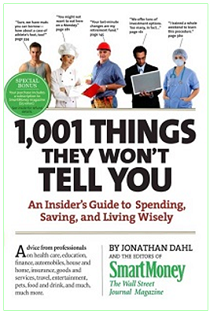
There are many books, magazines and websites for those consumers who want to know how to deal with an economy where everybody wants your money, This book is a great “insider’s guide” to how to take control and wisely manage your money when it comes to practically all aspects of your everyday life. These are the 1,001 things that they won’t tell you related to your family, your children’s education, your home, your money, your goods & services, your food & drink, your mind & body, your medical & dental services, your car and everything related to your free time and entertainment. This guide was published back in 2009, but, except for minor tidbits of information, it still applies. Based on the SmatMoney magazine’s “Ten Things They Won’t Tell You” column, it covers 100 businesses and professions that readers interact with daily.

May you have a prosperous and healthy New Year 2017!

1,001 things they won’t tell you : an insider’s guide to spending, saving and living wisely. Jonathan Dahl. New York: Workman Publishing, 2009.

Dec 302016
 
Made in the USA

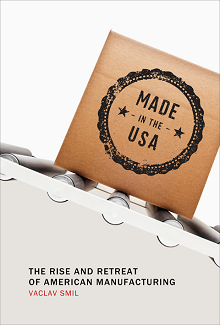
This is one of those books that states the obvious, that makes us look at the emperor’s new clothes (the obsession with the information age and everything digital over anything else) and that should be read by those who are in power in government, in private companies, in academia. How apt to start a new year, 2014, with a fresh perspective for the USA, a country which, in a sort of reverse Faustian bargain sacrificed its manufacturing industry, the one that contributed enormously to nation-building and world admiration, and domination, in exchange for low cost and low quality goods produced mostly in Asia, where those countries, notably China, got away with all the know-how and the knowledge behind the business of manufacturing.

To quote the publishers: “In Made in the USA, Vaclav Smil powerfully rebuts the notion that manufacturing is a relic of predigital history and that the loss of American manufacturing is a desirable evolutionary step toward a pure service economy. Smil argues that no advanced economy can prosper without a strong, innovative manufacturing sector and the jobs it creates. Reversing a famous information economy dictum, Smil argues that serving potato chips is not as good as making microchips.”

Made in the USA : the rise and retreat of American manufacturing. Vaclav Smil. Cambridge, Massachusetts: The MIT Press, 2013.

Dec 162016
 
Big data

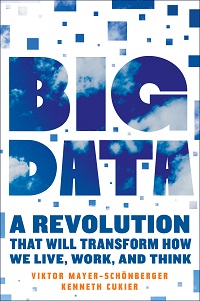
In the beginnings of the information era, “data” was simply a collection of facts organized and represented in a suitable form for processing by a computer. Along came the “relational database management systems” or RDMS that since the 1980s constitute the database model, i.e. rows and columns neatly organized in tables and then these tables interrelated to each other, which is the predominant form of storage, even today, of any type of information. The revolution, or rather, evolution, that big data encompasses has to do with the power of connecting and associating disparate pieces of information in a vast sea of data such as the Internet. “The real revolution is not in the machines that calculate data but in data itself and how we use it” but most importantly how scientists, companies and ordinary people will make decisions and try to interpret reality in ways that no longer are subject to a predetermined worldview. Social media, like Facebook, Twitter, LinkedIn and their astronomical number of “interactions” among users all over the world, every single second of the day, produces, generates, begets, in fact, “big data.” On a side note, we should say that this book would have benefited of an introduction explaining the title of each one of its 10 chapters or simply the editorial orientation intended: Now, More, Messy, Correlation, Datafication, Value, Implications, Risks, Control, Next.

Big data : a revolution that will transform how we live, work, and think. Viktor Mayer-Schönberger and Kenneth Cukier. New York City: An Eamon Dolan Book. Houghton Mifflin Harcourt, 2013.

Dec 062016
 
Mandela

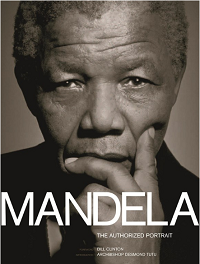
The news came yesterday: Nelson Mandela has departed forever from this world. However, his life, his actions, his legacy will live forever. This is the life of a man who against all odds transformed not only himself but a whole nation and the entire world. He spent 27 years in prison for opposing the execrable Apartheid regime of South Africa and once freed, in 1990, instead of claiming revenge or being bitter, he stood tall and instead of retribution he asked for reconciliation. Reconciliation between those oppressed and their persecutors.  He said “"As I walked out the door toward the gate that would lead to my freedom, I knew if I didn’t leave my bitterness and hatred behind, I’d still be in prison" and that’s because he did not give in to resentment since, as he put it, “resentment is like drinking poison and then hoping it will kill your enemies." The publisher of this book, which came out 7 years ago, calls it “one of the most lavishly illustrated and comprehensive tributes to Nelson Mandela’s life and work ever produced” and whether that is true, given the fact that a myriad of books have been, and will be, written about him, the important thing is that this is great starting point to learn about Mandela. Add to that the fact that his closest comrades from Robben Island prison, Mac Maharaj and Ahmed Kathrada, are the book editors. The more you read and learn about Mandela the more you understand why he is revered all over the world. The result is sheer inspiration.

Other two pearls of wisdom from Mandela. On freedom: "To be free is not merely to cast off one’s chains, but to live in a way that respects and enhances the freedom of others." And on education, one of our core beliefs: "Education is the most powerful weapon which you can use to change the world."

Mandela : the authorized portrait. by Mac Maharaj (editor) , Ahmad Kathrada (editor) , Archbishop Desmond Tutu (introduction) , Bill Clinton (foreword). Kansas City: Andrews McMeel Publishing, 2006.

Dec 022016
 
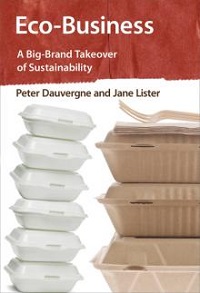
Eco-Business

Big multinational companies, the  likes of MacDonald’s, Walmart, Nestlé and Coca-Cola, to name just a few, are now increasingly helping their bottom line with the inclusion of sustainability in their business plans and actions, more than promoting sustainability of life on Earth as it may seem at first glance. The authors call this eco-business or “taking over the idea of sustainability and turning it into a tool of business control and growth that projects an image of corporate social responsibility.” This book will however reveal that “much of what big brands are doing involves defining and using sustainability as a business tool in ways that are actually increasing risks and adding to an ever-mounting global crisis.” This valuable book, well researched, cleverly written and with extensive notes and bibliographic references, will no doubt interest equally economists, environmental activists, business leaders and educated consumers.

Eco-Business : a big-brand takeover of sustainability. Peter Dauvergne and Jane Lister. Cambridge, Massachusetts: The MIT Press, 2013.

Nov 302016
 
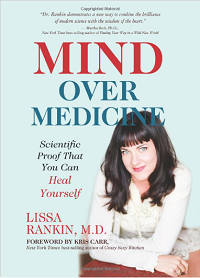
Mind over medicine

It’s 2013 and little by little physicians are realizing, and proclaiming, what ancient wisdom and cultures have always known: heal thyself. The subtitle of this great and refreshing book says it all: Scientific proof that you can heal yourself. Not that the medical establishment had been denying notable cases of spontaneous healing for the last 50 years, but this book stands out as a way of writing a “personal prescription” after a “personal self-healing diagnosis” like the one the author put herself through. The result: a “radical self-care.” The book starts with this reflection: “We’ve been led to believe that when we get sick, it’s our genetics. Or it’s just bad luck—and doctors alone hold the keys to optimal health.”

Mind over medicine : scientific proof that you can heal yourself. Lissa Rankin, M.D. Carlsbad, CA : Hay House, Inc., 2013.

Jun 072016
 
How not to be wrong

It is almost a universal principle to all students around the world that mathematics is boring or at least not the favorite subject for a sizable majority. The problem, as we have witnessed ourselves in our high school years, is not that math is boring, math teachers are. I may be overgeneralizing but the point is that mathematical thinking is something that paradoxically we don’t learn in math classes. “Math is a science of not being wrong about things, its techniques and habits hammered out by centuries of hard work and argument” argues the author.  Learn in this book, a delightful reading, about the amazing facts and insights provided by math and how it encompasses and affects every realm of human endeavors when it is done the right way.

A personal anecdote: I always remember the disapproving gaze and eerie silence of my math teacher precisely when I asked him “When am I going to use this?”, the preface title of the book, after a series of lessons on mathematical logic. Only many years later, as a student of computer programming I clearly saw, by myself, the usefulness of that interesting subfield of mathematics. My math teacher had the opportunity to enlighten me about the power of mathematical thinking but he certainly did not do it, or simply did not know it himself.

How not to be wrong : The power of mathematical thinking. Jordan Ellenberg. New York: The Penguin Press, 2014.