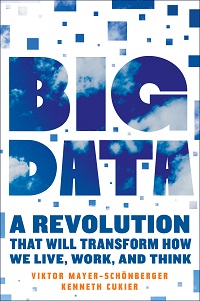
In the beginnings of the information era, “data” was simply a collection of facts organized and represented in a suitable form for processing by a computer. Along came the “relational database management systems” or RDMS that since the 1980s constitute the database model, i.e. rows and columns neatly organized in tables and then these tables interrelated to each other, which is the predominant form of storage, even today, of any type of information. The revolution, or rather, evolution, that big data encompasses has to do with the power of connecting and associating disparate pieces of information in a vast sea of data such as the Internet. “The real revolution is not in the machines that calculate data but in data itself and how we use it” but most importantly how scientists, companies and ordinary people will make decisions and try to interpret reality in ways that no longer are subject to a predetermined worldview. Social media, like Facebook, Twitter, LinkedIn and their astronomical number of “interactions” among users all over the world, every single second of the day, produces, generates, begets, in fact, “big data.” On a side note, we should say that this book would have benefited of an introduction explaining the title of each one of its 10 chapters or simply the editorial orientation intended: Now, More, Messy, Correlation, Datafication, Value, Implications, Risks, Control, Next.
Big data : a revolution that will transform how we live, work, and think. Viktor Mayer-Schönberger and Kenneth Cukier. New York City: An Eamon Dolan Book. Houghton Mifflin Harcourt, 2013.